
-
 Why does science have proofs but religion doesn’t have

Connect with like-minded individuals, ask questions, share ideas, and participate in discussions on a variety of topics.

Lost your password? Please enter your email address. You will receive a link and will create a new password via email.
Please briefly explain why you feel this question should be reported.
Please briefly explain why you feel this answer should be reported.
Please briefly explain why you feel this user should be reported.
Science is often preferred by many people today not necessarily because God or religion is rejected, but because science offers explanations that are observable, testable, and practical for understanding how the world works. Science focuses on evidence that can be measured, repeated, and verified, wRead more
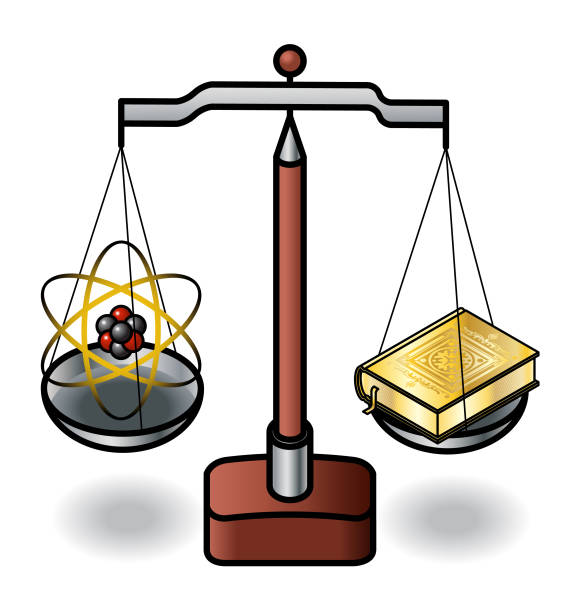
Science is often preferred by many people today not necessarily because God or religion is rejected, but because science offers explanations that are observable, testable, and practical for understanding how the world works. Science focuses on evidence that can be measured, repeated, and verified, which makes it useful for solving everyday problems such as health, technology, and the environment.
One reason science is widely accepted is its method of proof. Scientific ideas are tested through experiments and observations, and they can be questioned or improved over time. This process gives people confidence because results can be seen and confirmed by others. For many, this clarity makes science feel more reliable in explaining physical realities.
Religion, on the other hand, is largely based on faith, belief, and spiritual experience, which are personal and not always measurable. Religious teachings often focus on meaning, purpose, morality, and life beyond the physical world. Because these aspects cannot be tested in the same way as scientific theories, some people feel religion lacks the type of proof they are accustomed to in a modern, evidence-driven society.
Another reason science is favored is the visible impact of its wonders. Advances in medicine, communication, transportation, and technology have directly improved quality of life. These achievements are easy to see, so people naturally place more trust in science for solving practical problems.
However, it is important to note that science and belief in God do not have to oppose each other. Many people see science as explaining how things work, while religion addresses why life exists and how people should live. They serve different purposes and answer different kinds of questions.
In summary, science is often preferred because of its evidence-based approach and visible results, not simply because religion lacks value. For many individuals, both science and faith can coexist, each offering insight into different aspects of human life and understanding.
See less